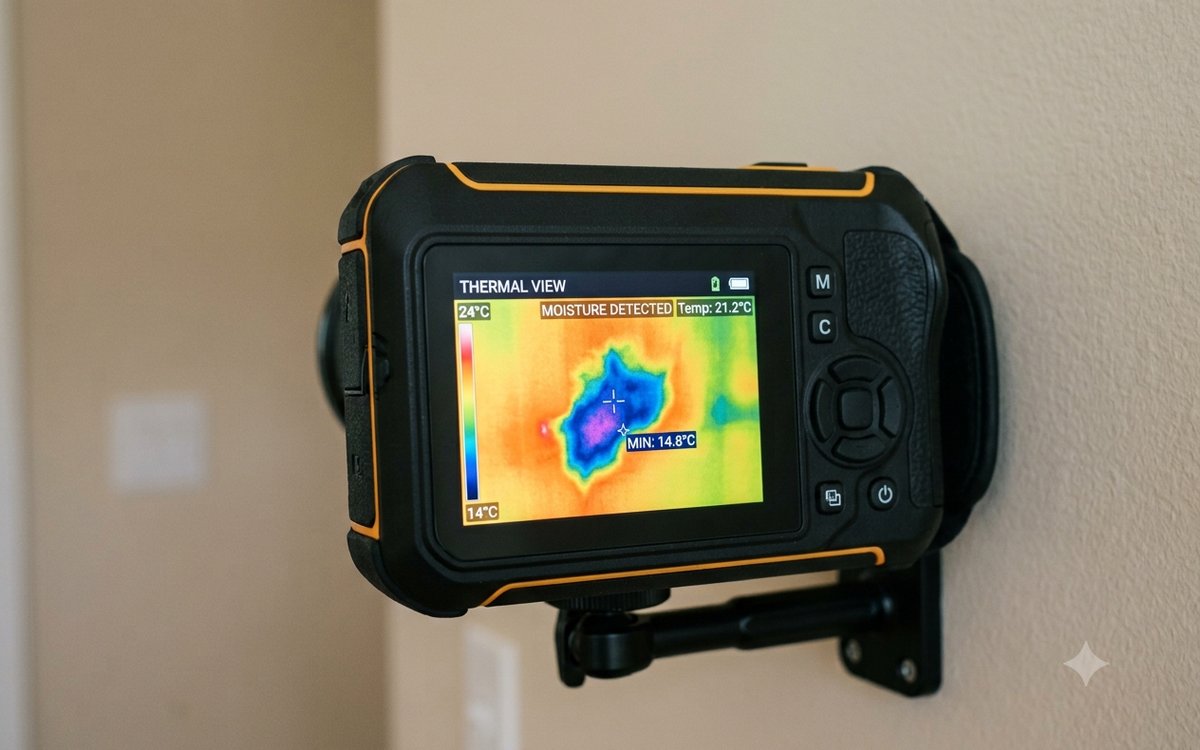
A real inspection finds the water first. We map moisture, trace the source, and give you a written report that tells you what you actually have.
Mold does not appear without water. Every colony growing in a wall cavity, behind a shower surround, or across a basement ceiling is being fed by a moisture source, and any inspection that does not identify that source has not finished the job. A contractor who tears out drywall without finding the leak will be back at your house next season.
Our inspections start with the building, not the stain. We evaluate how water moves through the structure, where humidity collects, and which materials are holding moisture right now. Only then do we talk about what is growing and what it will take to correct it.
If you can see mold and you know where the water came from, an inspection may be unnecessary and we will tell you so. Testing a visible problem you have already identified often spends money that belongs in the remediation itself.
An inspection earns its keep when the situation is unclear: a musty odor with no visible source, recurring growth that keeps returning after cleaning, health symptoms that improve when you leave the house, a real estate transaction, a suspected leak inside a wall, or a dispute with a landlord or insurer where documentation matters.
Georgia does not license mold inspectors or remediators, and the Environmental Protection Division does not regulate mold in homes and businesses. There is no state board reviewing anyone's work and no minimum standard a company must meet before advertising these services. That makes the choice of who you call more important here than in states that regulate the trade.
We work to ANSI/IICRC S520, the American National Standard for professional mold remediation, and we send every sample to an accredited independent laboratory. We are glad to explain exactly which methods we used and why, on any job.
