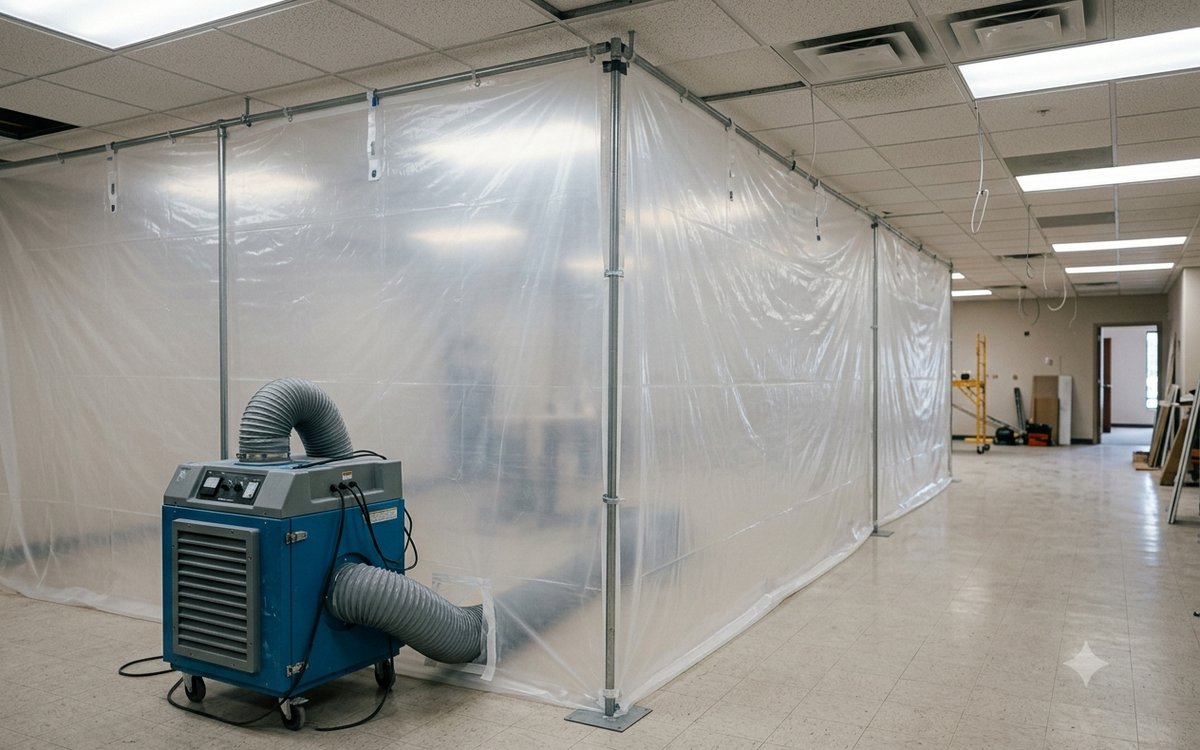
Straight answers about what black mold actually is, laboratory identification of what you have, and contained removal when it is warranted.
The term usually refers to Stachybotrys chartarum, a dark greenish-black mold that requires sustained saturation to grow. It is not the only dark mold, and most dark growth in Georgia homes is something else entirely, frequently Cladosporium or a surface mildew on a bathroom ceiling. Color is not a diagnosis. Laboratory analysis is the only way to know which organism you are dealing with.
We say this plainly because the phrase gets used to sell work. A company that identifies black mold by eye and quotes a large number on the spot is not following any standard of care.
When a laboratory does confirm Stachybotrys, it tells you something specific: this material was wet for a long time. The organism needs continuously saturated cellulose, which means a leak that ran for weeks or months rather than a humid room. Finding it shifts attention to the water source and to how far the moisture traveled through the assembly.
It also changes how we verify the work. Stachybotrys spores are heavy and sediment onto surfaces rather than staying airborne, so air sampling alone can under-report it. Surface sampling is added during verification when this species was part of the original scope.
Molds including Stachybotrys can aggravate allergies, asthma, and other respiratory conditions, and children, older adults, and immunocompromised people tend to react first and most strongly. What we will not do is tell you that a particular species guarantees a particular illness. The honest position is that removing the growth and eliminating the water is the appropriate response, and questions about your specific symptoms belong with your physician.
