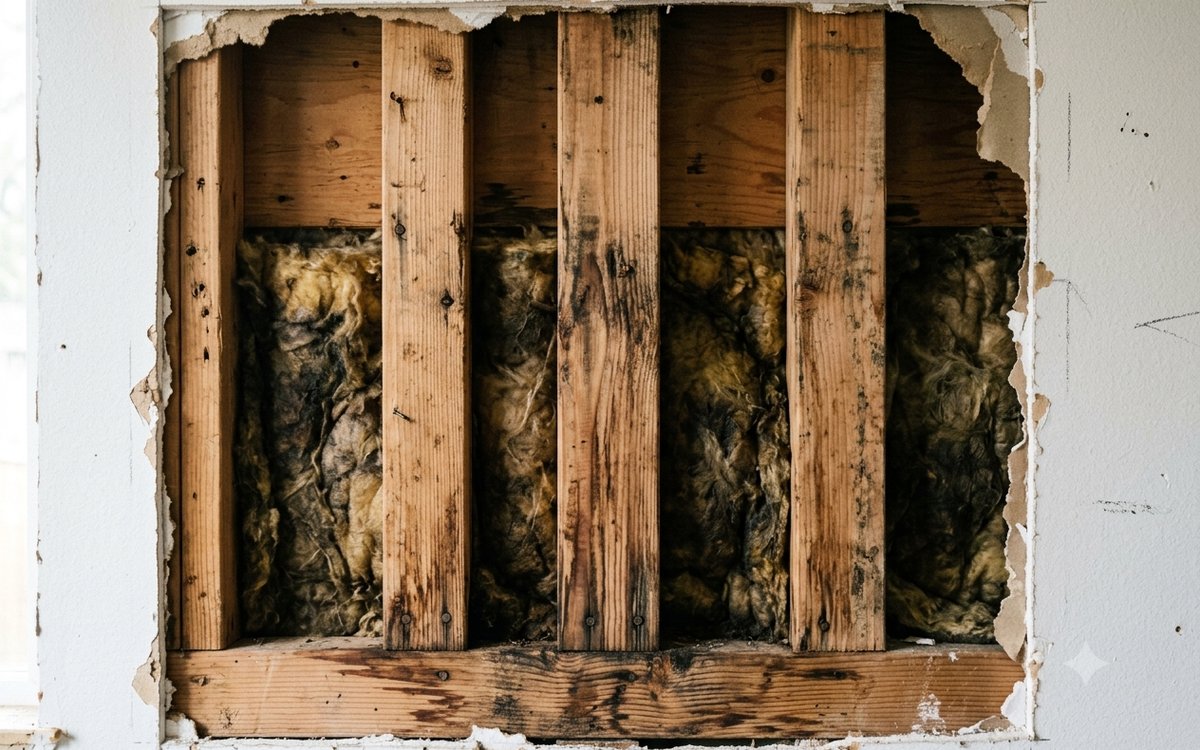
The species growing in your home is evidence. It tells us how wet the material got and roughly how long it stayed that way.
Before anything else: you cannot identify mold by looking at it. Dozens of common indoor genera appear black, and Stachybotrys, the one everyone means when they say black mold, is frequently not the one they are looking at. Identification requires a laboratory examining spore structures under magnification. Any contractor naming a species on sight is guessing, and usually guessing in the direction of a larger invoice.
Professionals group indoor molds by water activity, meaning how much available moisture a material must hold before that organism can colonize it. This matters enormously, because it turns the lab report into a diagnostic tool. The species present tells us whether we are dealing with a humidity problem, a slow leak, or sustained saturation, and that determines the scope of both the remediation and the repair.
These need only elevated humidity, no leak required. In a Georgia summer, a closet on an exterior wall or a poorly ventilated basement can reach these conditions on its own. Finding them alone often points to a ventilation and humidity issue rather than a plumbing failure.
These require sustained dampness beyond ordinary humidity: recurring condensation, a slow leak, poor drainage against a foundation. Their presence means the moisture has been consistent for a while, not a one-time event.
These are the water damage indicator molds. Materials must be genuinely wet, not merely humid, and stay that way. Stachybotrys typically needs one to two weeks of continuous saturation to establish. Finding these organisms means there was or still is an active water intrusion, and the investigation shifts to locating it.
| Genus | Appearance & Where It Grows | What It Means |
|---|---|---|
| Cladosporium | Olive to brown, velvety. One of the most common molds worldwide, indoors and out. Grows on fabric, wood, HVAC surfaces, and around windows. | Common allergen. Its presence indoors at levels near the outdoor baseline is often normal. |
| Penicillium | Blue-green, fuzzy, spreads quickly. Very common on water-damaged materials, fabrics, and insulation. | Allergenic. Rapid indoor amplification usually signals a moisture event. |
| Aspergillus | Extremely varied, over one hundred eighty species in many colors. Ubiquitous indoors. | Mostly allergenic. A few species, notably A. fumigatus, can cause infection in immunocompromised people. |
| Alternaria | Dark green to brown, velvety texture. Showers, under sinks, around windows. | A well-documented asthma and allergy trigger. |
| Ulocladium | Black, found on heavily water-damaged drywall and around leaks. | A reliable water damage indicator. Its presence points to a real intrusion. |
| Chaetomium | Cotton-like, darkening to brown or black with age. Strong musty odor. | Tertiary colonizer indicating major, long-standing water intrusion. Produces mycotoxins. |
| Stachybotrys | Dark greenish-black, often slimy when actively growing. Needs saturated cellulose. | The organism people mean by black mold. Signals prolonged saturation. Heavy spores settle rather than staying airborne, which affects how it is sampled. |
| Trichoderma | White with green patches, fast growing on very wet material. | Requires high moisture. Some strains produce mycotoxins. |
You will also see molds sorted by how they affect people. Allergenic molds, the largest group by far, provoke allergic and asthmatic responses. Pathogenic molds can cause opportunistic infection, generally in people with compromised immune systems rather than healthy adults. Toxigenic molds produce mycotoxins, secondary metabolites that can be harmful, and Stachybotrys and Chaetomium are the names that come up most often in that category.
These groupings are useful, but they get abused in marketing. The category a genus belongs to does not tell you the exposure level in your home, and exposure level is what actually matters. That comes from sampling, interpreted against an outdoor baseline.
A good laboratory report notes hyphal fragments, which are pieces of the structural filaments of a growing colony rather than spores. Elevated hyphal fragments indicate active growth somewhere nearby, as opposed to spores that drifted in and settled. It is one of the details that separates a report you can act on from a number on a page.
